Collection HDA hda-sl01@hongdapt.com Online message Site Map Hello, welcome to hongda spray-painting machine electric official website!
Sales of HONGDA spraygun We specialized in manufacturing electrostatic spray guns
+86 13622624429

+86 13622624429
Contact person: Ms Croesus
0769-81885105
Phone: +86 13622624429
E-mail: hda-sl01@hongdapt.com
Skype: hongdapt@outlook.com
QQ: 1550167687
Factory: Block A No336, Changqing North Road Chanan Town . dongguan China
Hotline:+86-13622624429
The difference between fine-atomizing serrated-edge and non-serrated electrostatic rotary bell atomizers for liquids.
The core atomization principle of liquid electrostatic rotary bells combines high-speed centrifugal atomization with electrostatic attraction. The ring of fine atomizing teeth at the bell's edge is a key structural feature that directly influences the mechanism of coating breakup, the characteristics of atomized droplets, suitable operating conditions, and the quality of the finish. The primary distinctions between these systems lie in four key areas: atomization mechanism, coating results, application scenarios, and process stability. The specific differences are as follows:
I. Differences in Atomization Mechanism (Core Principle)
 |
 |
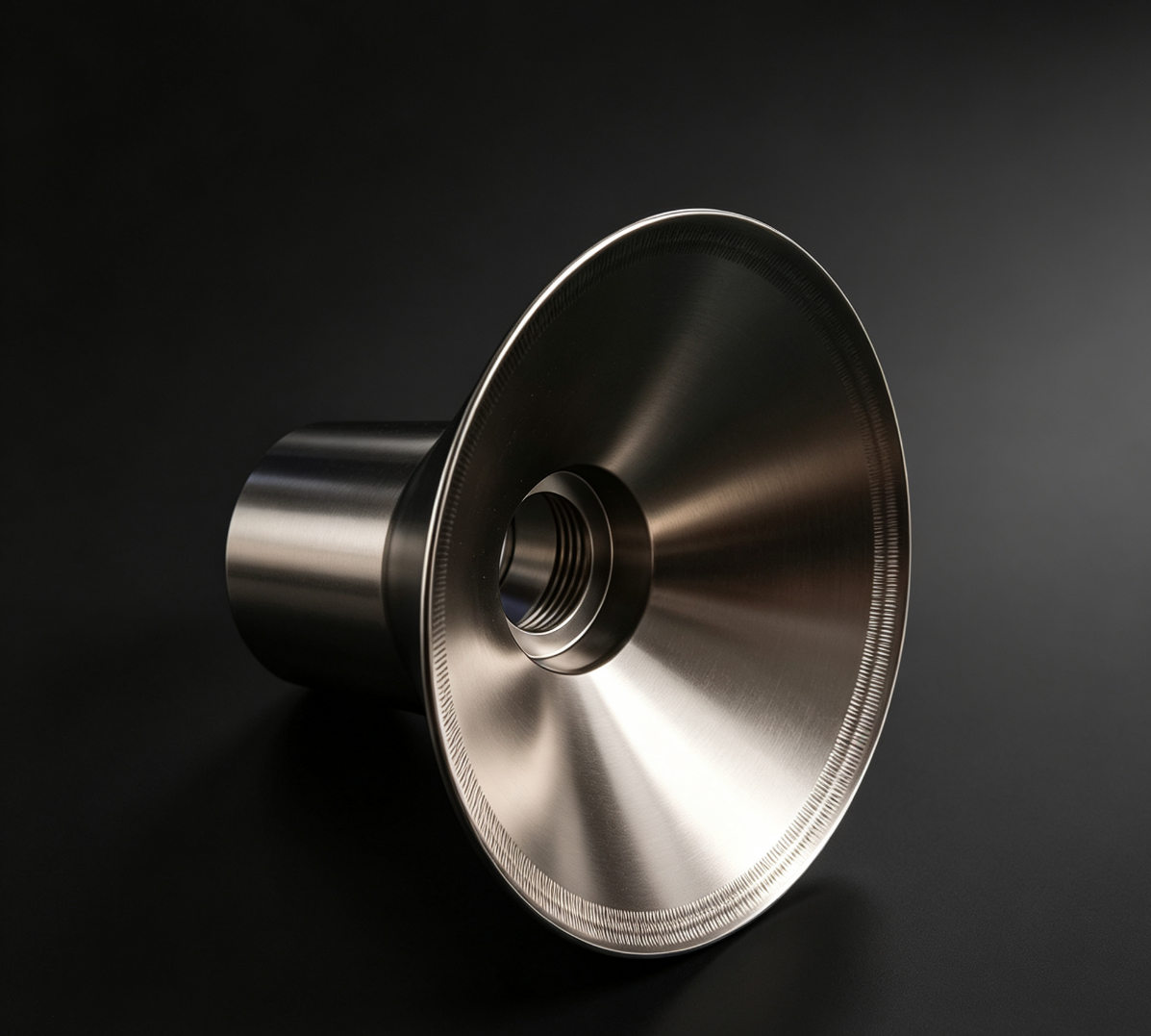
1. Atomizing bell cup with fine atomization gears
This system relies on a dual mechanism of mechanical tooth shearing and centrifugal force for atomization. After the coating spreads evenly across the inner wall of the rotatingcup, the fine teeth at the high-speed rotating rim actively shear the liquid film, tearing the continuous layer into fine liquid filaments; these are then flung outward and stretched by centrifugal force, while an electrostatic field furtherrefines them into uniform droplets. The structured arrangement of the teeth forces the coating to break apart, ensuring highly active atomization—a process classified as forced mechanical atomization.
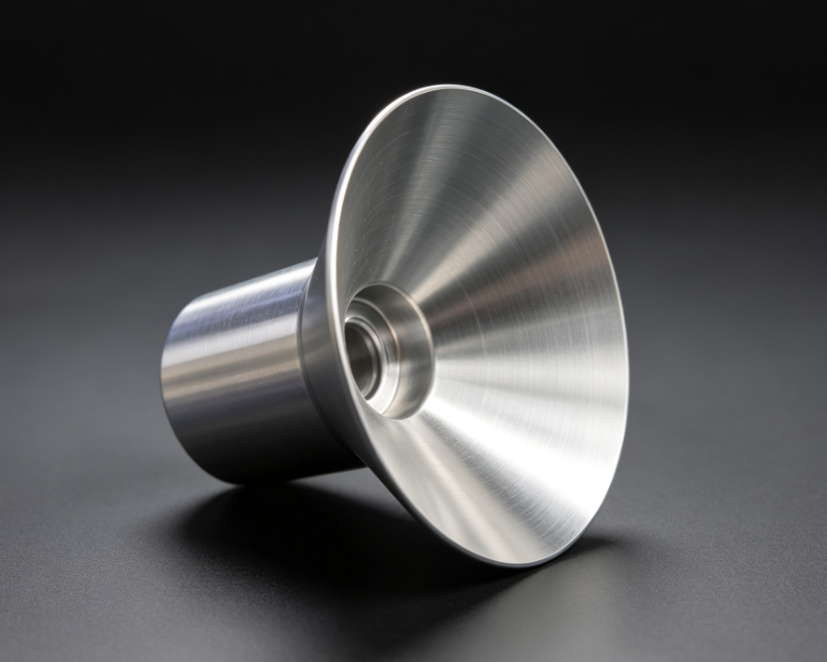
Atomization relies solely on pure centrifugal force combined with air shear. The cup rim is smooth and devoid of structural features; the coating breaks free from the liquid film's surface tension entirely through centrifugal force generated by high-speed rotation, naturally stretching and snapping into droplets. There is no mechanical shearing action, making this a form of passive, natural atomization. Atomization performance depends entirely on rotational speed, coating viscosity, and air pressure assistance, resulting in a lower capacity for droplet breakup.
II. Differences in Atomized Droplets and Spraying Results
1. Models with Fine-Atomization gears
These models produce finer atomized droplets with exceptional uniformity in particle size and minimal size variation. The paint mist forms a soft, even cloud-like pattern, free fromlarge droplets, "cobwebbing" (stringing), or localized coarse spray. The resulting finish is smooth and refined with excellent leveling properties; defects such as orange peel and pinholes are virtually eliminated, while the coating boasts superior gloss and fullness. Additionally, the spray fan is well-defined with clean, crisp edges, ensuring uniform coverage and superior wrap-around performance on corners and in crevices.
2. Toothless Smooth Type
This type produces relatively large mist droplets with poor uniformity and inconsistent particle sizes, making it highly prone to localized coarse mist and scattered large droplets. At low rotational speeds, issues such as filamentation, paint accumulation, and stray fibers are common; film leveling is mediocre, with a higher likelihood of slight orange peel and uneven thickness. The edges of the spray pattern tend to diffuse or become ragged, and when spraying intricate workpieces, missed spots at corners and localized paint buildup are likely to occur.
Differences in Process Parameters
1. Atomizing cup with fine atomization teeth
Offers broader compatibility, handling medium-to-high viscosity coatings such as PU lacquers, baking enamels, metallic paints, pearlescent paints, and high-build topcoats. The forced shearing action of the tooth structure easily breaks down viscous paint films, achieving high-quality atomization without requiring ultra-high rotational speeds. It accommodates a wide flow rate range, maintaining stable atomization at both high and low flow rates while resisting clogging or spray interruption. When spraying metallic or pearlescent paints, it effectively preserves pigment particles from being shattered, ensuring uniform color and consistent sparkle effects across the finish.
2. Toothless, smooth-surface atomizing cup
Suitable only for low-viscosity, highly fluid coatings, such as diluted clear coats, thin primers, and lightweight water-based coatings. It fails to adequately atomize high-viscosity coatings, leading to poor atomization and issues like paint accumulation or sagging. It imposes strict requirements on process parameters, relying on a precise combination of high rotational speed and air pressure; fluctuations in speed directly compromise atomization performance. Compatibility with varying flow rates is poor, and high flow rates often result in paint mist accumulation.
IV. Differences in Stability, Efficiency, and Maintenance
1. Model with fine atomization gears
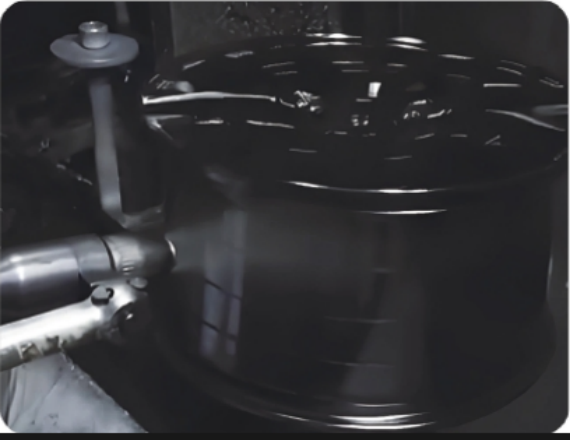
This model offers high process tolerance; atomization remains stable despite minor fluctuations in rotational speed, air pressure, or coating viscosity, ensuring excellent consistency in mass production. It delivers higher coating utilization, reduced overspray, and superior electrostatic attraction, resulting in paint savings and environmental benefits. Its only drawback is that paint residue tends to accumulate in the tooth slots, requiring meticulous periodic cleaning; otherwise, long-term buildup can slightly compromise atomization uniformity.
2. Toothless smooth model
This model has very low process tolerance and demands high precision regarding rotational speed stability, coating mixing ratios, and air pressure; even slight parameter deviations can lead to atomization defects. Coating utilization is slightly lower, with more pronounced overspray and higher material loss. Its advantages include a smooth cup rim with no hard-to-clean areas, making cleaning extremely simple and minimizing the risk of paint buildup or nozzle clogging. It offers low maintenance costs and low failure rates, making it suitable for low-frequency or simple spraying applications.
V. Summary of Application Scenarios
Atomization cup with fine teeth: Suitable for mainstream high-precision industrial spraying, including automotive parts, home appliances, and high-end topcoats (metallic, pearlescent, and high-build coatings). Ideal for automated mass production using robots or reciprocators where high surface smoothness, high gloss, and minimal defects are required.
Toothless smooth atomization cup: Suitable for basic, low-end spraying tasks such as primer application, thin protective coatings, and low-viscosity clear coats. Best for scenarios where aesthetic requirements for the workpiece are lower and the priority is ease of maintenance and reduced equipment costs; not suitable for high-end topcoats or high-viscosity coatings.