Collection HDA hda-sl01@hongdapt.com Online message Site Map Hello, welcome to hongda spray-painting machine electric official website!
Sales of HONGDA spraygun We specialized in manufacturing electrostatic spray guns
+86 13622624429

+86 13622624429
Contact person: Ms Croesus
0769-81885105
Phone: +86 13622624429
E-mail: hda-sl01@hongdapt.com
Skype: hongdapt@outlook.com
QQ: 1550167687
Factory: Block A No336, Changqing North Road Chanan Town . dongguan China
Hotline:+86-13622624429
Comparative analysis of rotary cup and ordinary nozzle atomization
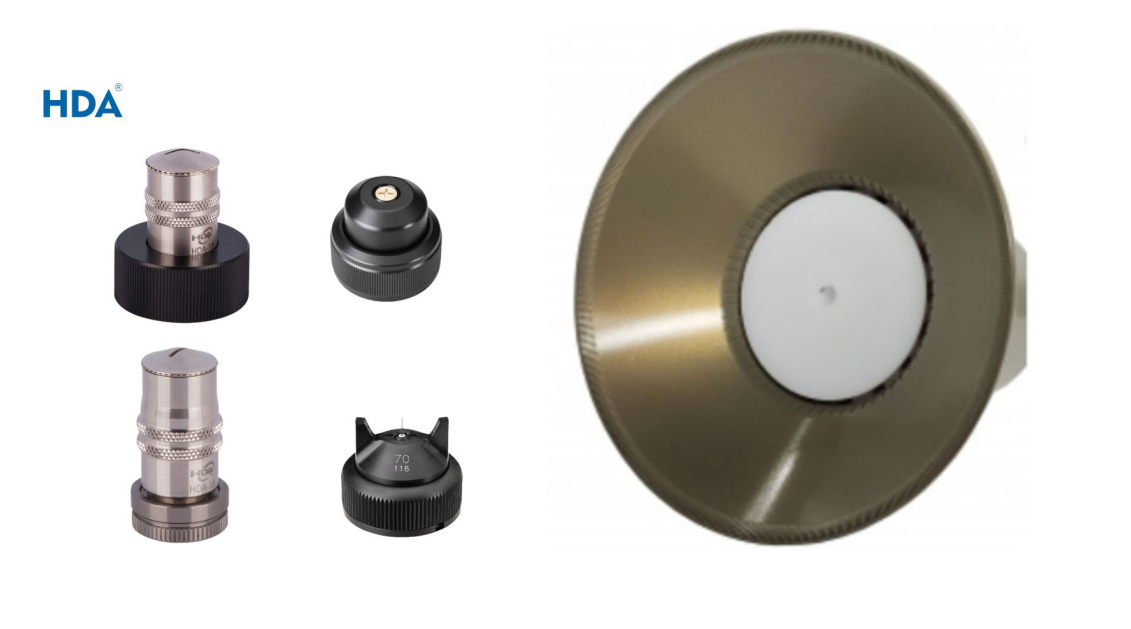
1、Atomization principle and core mechanism
Realize liquid fragmentation based on high-speed rotational centrifugal force. The liquid generates centrifugal force by rotating at high speed (up to 25000-75000 rpm) through a rotating cup, and scatters outward along the cup wall to form a liquid film, which is further broken into small droplets under surface tension. Partial rotary cup combined with electrostatic field (such as 100000 volts high voltage) enhances the uniformity of the coating on the surface of the workpiece through electrostatic adsorption, reducing overspray.
Ordinary nozzle atomization
Relying on pressure or aerodynamic shear force to break liquids. Common types include:
Pressure nozzle: The liquid enters the rotating chamber through a tangential inlet under high pressure (2-20 MPa), forming a liquid film and breaking into droplets. The atomization quality is significantly affected by pressure.
Pneumatic atomizing nozzle: Compressed air is mixed with liquid to break the liquid film through momentum exchange. It is suitable for low viscosity liquids, but consumes a large amount of air.
Ultrasonic Atomization Nozzle: Utilizing piezoelectric ceramics to generate ultrasonic cavitation effect, achieving liquid atomization, suitable for low flow scenarios.
mparison of atomization effects
Droplet size and uniformity
Spinning cup atomization: The droplet size is finer and evenly distributed, especially suitable for high viscosity liquids such as metal paint and resin. Electrostatic assistance can further optimize particle size distribution and improve coating quality.
Ordinary nozzle: The particle size is greatly affected by pressure or aerodynamic parameters, and high viscosity liquids are prone to uneven particle size. It is necessary to improve the effect by reducing viscosity through high pressure or preheating.
Atomization angle and coverage range
Rotating cup atomization: large atomization angle (hollow cone spray), wide coverage, suitable for large-area spraying (such as automobile body).
Ordinary nozzle: the adjustable range of atomization angle is limited, and the solid cone spray is suitable for local precise spraying, but the efficiency of large area coverage is low.
Material adaptability
Spinning cup atomization: It has stronger adaptability to high viscosity, non Newtonian fluids (such as long-chain molecular liquids) and can optimize the atomization effect by adjusting the speed.
Ordinary nozzle: Pressure nozzle has better effect on low viscosity liquids; Pneumatic nozzles require high air pressure support, resulting in high energy consumption; Ultrasonic nozzles are only suitable for low flow scenarios.
May be someone said, but with angles and narrow rotating bell, spraying cannot be completed with as the triangular position and narrow areas.
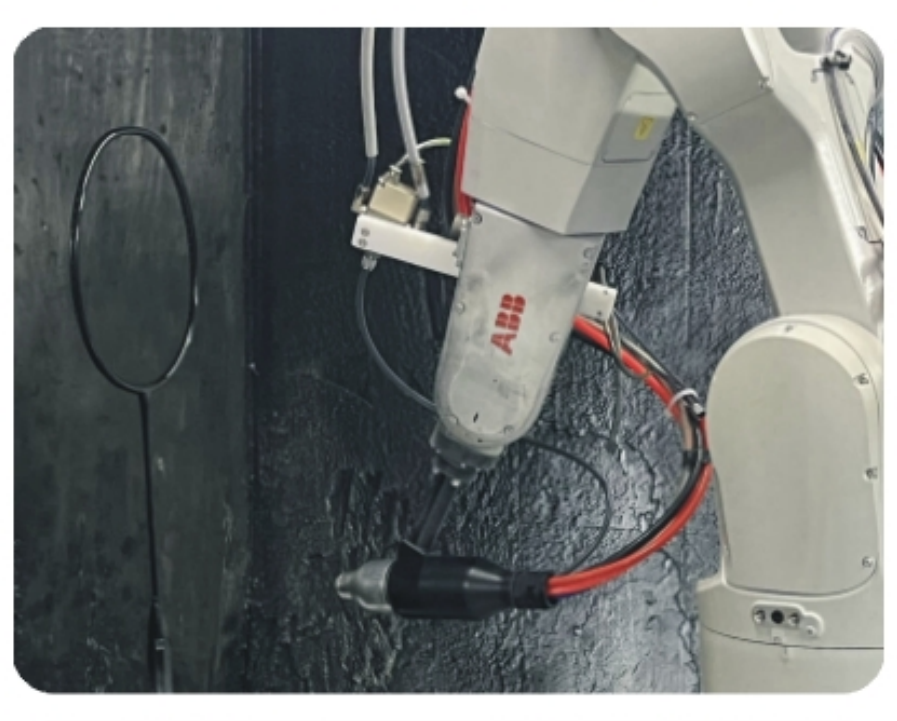
Actually, the atomization cup of the rotary cup is optional, such as our HDA-603 smart electrostatic spray gun apply with 20mm -30mm atomization bell cup then the pray width of the small bell cup as 20mm is 80-100mm So its spraying is relatively concentrated, and the air pressure is higher than that of 35mm and 50mm atomizing cups. Therefore, in the triangular position, these narrow areas can still be sprayed without the need for repainting